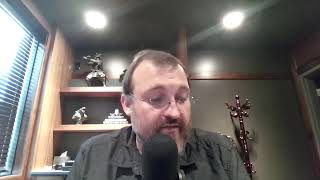
This is Charles Hoskinson broadcasting live from warm, sunny Colorado. Next week, I’ll be in rugged Wyoming. I want to make a video to talk a little about something that's been in the news.
As many of you know, I'm a diverse entrepreneur, and I have ventures across the spectrum, from synthetic biology to healthcare, regenerative medicine, and even a bison ranch. I also have Input Output and the portfolio thereof, including RealHogan, Midnight Cardano, and other projects. I got started as a computer science-based entrepreneur, writing software, doing engineering, and creating technology products. My brother and dad have a much more traditional background; my brother is a doctor, my father is a doctor, my uncle is a doctor, and my grandfather was a doctor. The Hoskinsons have been in medicine for over 70 years, since the 1950s, and they’ve watched the entire healthcare industry transform from mostly rural, solo practitioners or small groups, excluding cities, to a system that has become a bureaucratic hellscape.
In 2021, I asked my dad and brother if it would make sense for us to pursue something in healthcare, as my dad had retired and my brother was so burnt out he was leaving medicine. I had aspirations to do something in regenerative medicine. I’m a big believer in network medicine. I believe the interactome, the electrome, and other advancements will be revolutionary for human health, and with AI enhancements and personalization, they will really change things so we can cure diseases. However, traditional healthcare was always a mystery to me because it’s a very old, bureaucratic, highly regulated, permission-only market with very little innovation.
My dad suggested we try to build a clinic, and I thought it would be fun to explore that. The reality is that clinics don’t make money. Cancer and surgery are the only two areas that really make any money outside of the pharmaceutical side. If you're in primary care, the vast majority of people listening who are in primary care will honestly tell you it’s a losing proposition. If you look at the economics of primary care—internal medicine, family practice—you have to see about 24 to 28 patients per day to break even with the infrastructure. That’s a patient every 15 minutes, plus a lot of paperwork on the other side. That’s just to break even, not even to make a profit.
The profit tends to aggregate in areas like procedures, measured by a metric called RVUs, and in pharmaceuticals. For example, biologics are super profitable these days, and a significant portion of Medicare spending—about half—occurs in the last two years of life. If you live to 80, your lifetime spending on healthcare between ages 0 and 78 is half of your total spending, while the other half is in those last two years, which is an extraordinary statistic.
In an insurance model, you typically collect less than half of what you bill. It’s the only business I’ve ever been in where there’s no price negotiation; it’s mandated what you’re roughly paid. It’s not fair because hospitals can bill more for the same services than clinics do. Even when you bill for services rendered, it’s not clear if you’ll actually be paid unless you get pre-approvals. There have been cases where doctors, while operating, were told by the insurance company that they didn’t want to approve the procedure.
The American healthcare system is broken, and we knew that going into Gillette. We wanted to build a center of excellence and create a beautiful clinic for the people there, saying, “You deserve something; you’re not just second-class citizens. You matter.” We built a beautiful facility and included a lot of my personal artwork. We also displayed some cool items we had collected over the years, like the Lost in Space B9 robot and the robot from Forbidden Planet. We even had a vivarium with poison dart frogs. It’s a beautiful building, but even after heavy optimization, we went from about a $4 million loss per month to about a $1.7 million loss per month. For comparison, the hospital in the same market, Campbell County Health, loses more than $10 million a year, even after receiving a $20 million annual government subsidy.
We approached decision-makers in the jurisdiction and many people in the medical industry, explaining that we had 22,000 patients. The reality is that reimbursements are so low that in many cases, we actually lose money seeing patients, especially in mental health. Our cost per appointment is higher than the RVU reimbursement rate per appointment. So even if the insurance pays, we lose money. We asked if they could subsidize this in some way, but they said no. Local decision-makers were comfortable spending $100 million to attract a nuclear recycling facility to Gillette, but they didn’t want to share any of the mill levy or other funds in the jurisdiction.
We were left with two choices: run it like a private equity or a large national hospital group, where most care is delivered by mid-levels like physician assistants and nurses, or shut it down. My dad is nearly 70 and retiring this year, and my brother is done with medicine. It’s a family business, and I realized the community and government didn’t want to subsidize it. It’s a fixed market; people pay through insurance or Medicare and Medicaid, so the price is the price. If I fill out the panels, I’m going to have physicians and nurses turnover quickly because they’re expected to work 60 to 80 hours per week for basically 40 hours of pay. My passion is not in clinical care or fee-for-service healthcare; it’s in stem cells, as evidenced by the Stem Cell Freedom Act, peptides, exosomes, and other next-generation treatments.
We tried for about a year to improve the situation in the clinic, starting last year with several rounds of optimizations and layoffs. Each time we did it, it damaged morale and created a toxic work environment. Some providers started looking for new jobs, while others reminded us that burnout is frequent. It became difficult to keep the organization open when it wasn’t enjoyable for people to come to work. We understand that work is hard, and we want to have a compassionate environment, but the goal of a healthcare facility should ultimately be to improve care for patients. It shouldn’t be about drama or accusations of greed when it was my own capital that went in. We never had outside investment and knew we’d be running the business at a loss.
After years of investment, the jurisdiction had to see some value. The hospital and other providers wouldn’t credential our doctors to operate in their surgical theaters or perform complex procedures. We either had to build our own surgical center or accept that we couldn’t practice high-value medicine. Independent providers in the community were unwilling to refer to us, even though we had the most advanced CAT scan and MRI in the entire state, with an AI upscaling system that produced beautiful seven Tesla images. For whatever reason, physicians in the community would refer to Elevations, a center some of them owned equity in, or to the hospital for lower-resolution images. I don’t understand how that benefits patient care, but this was the economic reality we faced.
When independent providers aren’t supportive, and the hospital views us as exacerbating their losses, it’s a tough situation. The local government had no desire to subsidize the building, and the business model itself cannot be profitable due to reimbursements set by insurance companies and the federal government. There was no path forward other than accepting a structural loss. Given that the goal was to have a fun family business and the family was leaving, the work environment had become toxic due to the optimizations. The appetite just wasn’t there.
I always try to be honest with people and don’t shy away from difficult truths. It’s disheartening when something you put on someone’s calendar is leaked to Facebook in 15 minutes. It’s disheartening to come into a town to help people and have them complain instead of acknowledging the good being done. The reality is that no one wins from this situation. We brought in neurologists, cardiologists, nephrologists, rheumatologists, and allergists—people who weren’t in the jurisdiction—meaning patients had to drive one to two hours one way for basic medical care. We reminded the state government of this and sought ways to move forward, but at the end of the day, nobody wanted to step up.
A business is a business, and my time is precious. Every day I wake up thinking about how to get Midnight adopted and how to get Cardano back into the top 10, back into the top five. These are my primary interests and areas of expertise. I’m not a physician and have never run a hospital; that’s not my core area of expertise, which is why I relied on my father and brother. My father ran a clinic of equivalent size at Kaiser, and my brother worked in many different medical facilities, both small and large. I needed their expertise and the expertise of others to do these things. Without access to trusted people, it’s difficult to continue moving forward.
After five years of building and scaling quickly, I understand how challenging things can be. We made many mistakes along the way, including scaling too quickly due to overwhelming demand. Normally, building a patient panel takes years, but in just five years, two-thirds of the town of Gillette became our patients without meaningful marketing. This showed that the area was vastly underserved, and we had a strong brand and reputation. We saved many lives, reversing conditions that had been unmanaged for years. I don’t view it as a waste of time or money because countless people are alive today because of our medical staff’s heroic work. That’s an investment that will always yield a return.
We scaled as quickly as we could, but Gillette wasn’t built for a facility like ours. Everything had to be constructed from scratch, and we even created our own construction company because the prior contractor was millions of dollars over budget and had massive delays. It was not a suitable environment for local contractors. We tried to ensure quality by building our own construction company, but we soon realized that it’s a difficult business to run. We decided to scale that down and maintain a construction footprint focused on maintenance and owner representation.
We built a 60,000 square foot medical facility that is state-of-the-art, and I’m very proud of that work. From the rock wool in the walls for soundproofing to the beautiful floors and all the great equipment, I’ve heard some say that if we weren’t so opulent in constructing the facility, it would have saved it. First and foremost, the doctors were actually paid 20 to 40% more than the market rate. They’re starting to realize this as they look for new jobs, with recruiters reminding them their salary expectations are out of band. We had to pay them more to leave great jurisdictions and come to Gillette, Wyoming, especially given the harsh winters and winds.
The second misconception is that the opulence of the facility bankrupted it. This was not ultimately a financial decision based on capital expenditures. I never anticipated recovering the cost of the facility; I wrote that off. I needed to break even, though. I can’t run a business that loses $20 to $30 million a year. The hospital has been in the jurisdiction for more than five decades, and without government subsidies, they lose about $30 million a year. They’re part of UC Health, a large, well-optimized hospital chain with structural advantages over us. This was never a business; it was essentially a charity, an indispensable component of public health in that county.
We tried hard to find a path forward that would be acknowledged. If this were to continue, there would need to be an understanding of working with us, just like the hospital and the federal government do with many subsidies for invaluable services in rural America. If you doubt this, ask yourself how many clinics of this size and scale are being constructed in places like Gillette across the nation. The answer is none. I was the first person to do it in many years. Conventional wisdom says it’s simply not possible, and these markets will always lose money.
We could have built a steel warehouse with crude fixtures, and it would still lose money. That’s the reality. It had nothing to do with capital expenditures; it was about operational expenses. I didn’t want to run a facility where people were expected to see 20 to 30, 40, or even 50 patients per day, nickel-and-diming everyone, ultimately disregarding outcomes and care. That’s the antithesis of everything our family has stood for in healthcare for 70 years. My grandfather made house calls when he first started practicing as an OBGYN, delivering babies and checking on patients while on his way to go fishing. My father, in private practice in Hawaii, would run into patients at diners and help them without billing them because he just wanted to help people. That’s why most people enter medicine.
If you ask any doctor over the age of 50 whether to become a doctor or enter the healthcare industry, the vast majority will say no, not in America. As noble as the profession can be, the reality is that you’re not the master of your own domain. Medicine has become completely controlled by a cabal of insurance companies, the pharmaceutical industry, hospital groups, and private equity. The soul of it has been systematically stripped out. Physicians suffer, but nurses suffer even more. The lower you are on the food chain, the more dispensable you feel, and the more you suffer. Many nurses now work over 80-hour weeks, suffering from burnout and fatigue, and a lot leave within three to seven years of entering the profession after investing so much time and effort.
We gave it our best. We’ll continue working in the regenerative medicine space, creating unique intellectual property with partners at the University of Wyoming for stem cell extraction. We have great partners in California and other places. We’ve learned how to get adipose-derived photogenic stem cells to people and pair them with amazing new treatments like hyperbarics to create the right environment for healing. Thanks to the Stem Cell Freedom Act, we’ll be able to deliver that lawfully, so patients won’t have to go to the Caribbean or Central America.
I’m sad that Gillette is no longer part of that story. The problem with being a businessman is that you have to make hard decisions and accept that sometimes you can’t run everything. No matter how big your heart is, your head sometimes has to take precedence. There will be political fallout, and in that jurisdiction, many people aren’t happy. Local politicians will keep their distance because that’s the nature of these things. You’re never popular when you’re closing things down; you’re popular when you’re building and cutting checks.
I want to say to all our patients that our heart was in the right place. We truly cared about your health and spent a lot of time, effort, and money during some of the best years of our family’s life, trying to figure out a path forward to keep you as healthy as possible. To those we saved, I’m glad we could help. That’s the greatest honor of my career. To those we couldn’t save, I’m sorry we couldn’t do more, and I regret that we couldn’t become a permanent institution. That’s just how things sometimes end up. But know that you mattered, and we cared. When we had the opportunity to give tours or practice, you mattered.
I’m sorry we live in a country that has created a system like this. No other modern healthcare system suffers from as many problems as ours does. I’m sorry we live in a country that considers people born in small towns to be less than those born in big towns. I tried to build a facility to remind everyone in Gillette that they are equal to everyone else. Gillette deserved what the Mayo Clinic and others offer. We put everything we had into this for five years and tried everything we could. We even had a good friend, a SEAL Team Six lead, come in to see if we could build a great commercial team made up of SEALs. We tried everything, from AI enhancements to playing the political, subsidy, and grant games, negotiating hard with insurance. The reality is we could never get it to a point where it made sense.
I truly regret that we couldn’t figure that out. I wish I were a better businessman and understood more about the healthcare industry to find some magic secret sauce. Ultimately, that’s my fault, and I take full accountability for it. But know that the time spent mattered, and you all mattered.
Now, there’s a closing question of what we do from here. As the articles have stated, we’re going to shut down that facility. Over the coming months, we care about ensuring a proper transition of care for the patients and that they have access to their records. Of course, in shutting down the facility, there are bills to pay. I have more than enough money to ensure that’s taken care of, so there’s no bankruptcy or any of these issues. All accounts will be closed, and the building will remain vacant for a time. We’ll talk with other healthcare systems to see if they’re smarter or more capable than us and can enter that market.
In the meantime, we’ll still be around. My brother, mom, and dad have left Gillette, but they live there. We’re going to take a more muted role in Gillette and let things fade down. It’s an interesting community, and they love it. I think my mom and dad will spend the rest of their lives there, as will my brother. Those are their roots, and they care about that community and its people. Perhaps one day, there will be a second act in a different vertical that makes more sense for that place and culture. I don’t imagine I’ll be re-entering the healthcare space from the perspective of running a clinic anytime soon.
We will continue our work in regenerative medicine, and I believe there are amazing things we can produce. Through a network of providers, those things will be transformational and change many lives. At the policy level, we’re going to write a series of articles and policy recommendations about things we think can radically reform and improve the American healthcare system so that clinics like ours can operate profitably in the United States. But that’s for another time.
For now, we wish you all farewell. To the people of Gillette, thank you for the kind memories and for being part of our family. Even though it wasn’t permanent, the memories mattered to us and to our patients. Thank you for your trust and for giving us the privilege of helping you. To the state of Wyoming as a whole, I love this place. It’s an amazing place to be and live. My ranch is up there, and I truly enjoy working with that state. It’s one of the most innovative, forward-thinking states in the U.S., if not the most, and it always punches above its weight.
If this were simply a Wyoming problem, I believe there could have been a solution. Unfortunately, healthcare is not just a Wyoming problem; it’s an American problem. It’s probably the biggest issue we have right now, with many lurking time bombs. It’s getting prohibitively expensive, and if anything is going to bankrupt this country, it’s either our appetite for war or our appetite for healthcare. In the coming decades, healthcare will be the most expensive thing we’ve ever

 1:07:35
 26:05
26:05 26:19
26:19