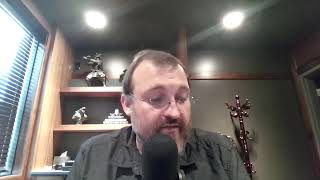
Hi, this is Charles Hoskinson broadcasting live from warm, sunny Colorado. Always warm, always sunny, sometimes Colorado. This is one of those okonomiyaki videos where I just talk about a little bit of everything. Back in the office, feeling good. Got a colorful shirt on, so let's get right to it.
First things first, let me show you this. This is from Ian, a wonderful guy and copywriter at Midnight Foundation. It's the state of the network for November 2025, a recap now that the distribution event is over. When we say that the Midnight Glacier Drop was the largest distribution event in the history of cryptocurrencies, this is not puffery. We have the numbers, and I'll read some of these off because it's actually still ongoing.
Scavenger Mine, the second phase of the Night token distribution, closed at midnight on November 20th with over 4.5 billion Night claims registered across more than 8 million participating addresses. Eight million. The Glacier Drop distributed is currently the industry's largest based on participating wallets and claim volume. The Midnight Glacier Drop multi-phase model for its native asset, Night, set a new standard for token distribution. The structure combines a broad community-driven allocation with mechanisms designed to increase fairness and systemic integrity.
Next, we have the redemption phase starting from December 8th, when stuff starts thawing. It takes a total of 450 days, and there will be four equal installments. There's also a "lost and found" aspect, so if you did not participate in the Glacier Drop but later find your private keys, you can still get some Night. This is a really creative mechanism to get exchanges involved because as Midnight goes up in value, they realize they can redeem on behalf of their users and do an exchange distribution, taking their cut.
Exchange-facilitated claims include Kraken, OKX, Bit Panda, and NBX, all of which have agreed to distribute Night to qualifying participants. These are KYC users already in the system, and collectively, tens of millions could be viable. So, you start a multi-network drop scavenger hunt, and then with lost and found, it adds up to millions of verified people.
The Midnight Network pulse shows that the ecosystem continues to see steady development throughout October. Developer activities maintained a consistent pace following a concentrated period that included three major hackathons in September and culminated in Midnight's largest-ever in-person hackathon on November 19th. We had about 140 to 150 builders and advocates at the Midnight Summit. We live-streamed it and discussed the philosophy, roadmap, and architecture of how we're going to do it. The Midnight channel has a lot of great content; I'd highly recommend you check it out.
We talked a bit about Night and Dust. Midnight is just explosive. On December 8th, the token comes out, bringing a lot of great liquidity and amazing announcements, including tier-one listings for the first time ever for a Cardano native asset. Following that, in Q1 of next year, we'll enter the next era where the federated mainnet will launch, featuring a larger set of partners and announcements. It's a fan-out strategy, starting from a core and building everything up.
The Discord will become the single source of truth. I will start doing events personally in the Discord that are exclusive to it, and we'll be adding a lot of tools and infrastructure for things like NFT issuance, giveaways, hackathons, and more. Look for future statements about it. The ambassador program is already recruiting; we have over 600 applicants in the pipeline. We're going to take the top 50 to start with, and we're also trying to get the Midnight Shift podcast started sometime in December. We're pushing aggressively on this.
The whiteboard video has almost 4 million views. You have the largest distribution of all time, several million views on the foundational video, the token coming out soon, and the federated mainnet launching after everyone has had a chance to get used to it. We have a hackathon every two weeks and some incredible news about dual Cardano-Midnight integrations. We've been in deep negotiations with many people, and there's going to be a proposal coming that will solve a lot of the DeFi problems historically faced by Cardano.
Now, there's also another cool thing unrelated to Midnight, but a project I've been following for a very long time. I want to congratulate the Unison team for reaching version 1.0. Unison is a special programming language, effectively like Haskell, Erlang, and Nyx all had a love child. If this language had existed in its current state with this level of maturity and the ability to pair it with Rust through an FFI, I would have built Cardano in it.
You identify a definition by its actual content, not just its human-friendly name. Everything is immutable in reference inside the system. You change one little thing, and you know it's a different thing. This is an awesome model for distributed programming, everything I wanted from Cloud Haskell. The backend of Unison is Haskell, and it's just really cool. I wanted to congratulate the team; they've been working on it for a long time. They have 26,000 commits, 3,400 PRs, 152,000 library downloads, 139,000 Unison definitions, and 1,300 authors. The programming language has really grown, and I think a lot of people are starting to realize this is the template for business logic for DAOs, smart contracts, and other things, especially when paired with Rust for high-performance tasks.
For the first time ever, the Solana account now follows me and tweeted something about me. You understand what I do for a living; I'm literally a decentralized financial platform rebuilding Wall Street on a blockchain. This is in reference to one of my tweets that's going viral, which is kind of the Rorschach test of Charles Hoskinson. If you're a fan, you know it was tongue-in-cheek, an example of the absurdity of the internet. If you're not a fan, you take a bad faith interpretation that it's the pinnacle of narcissism and ego.
I tweeted back at the Solana crowd, which also references a meme generated when there was an FBI complaint against the hacker on the Cardano network. Twitter certainly heated up quite a bit. The discussion about Cardano has changed from the Cardano soft fork and the hacking incident to my involvement with federal authorities and my tweets, which is actually quite good for the Cardano ecosystem because nobody's talking about the software anymore. So, mission accomplished.
The news cycle has changed, and there's more virality right now with this decentralized central bank tweet than anything about the Cardano incident, which I think people in Cardano appreciate, giving us plenty of time to clean things up. The internet's the internet; tweets aren't reality. People have fun, and it was really enjoyable to see the Solana ecosystem play into it. When I was posting pictures of blowing the Nintendo cartridge, it was good-spirited. I think that's the way we all take it.
The reality is we're all friends now. We're already talking about Midnight on Solana for privacy for Solana contracts and all types of RWAs that can enjoy the liquidity and DEXs in their ecosystem. There's a lot of cooperation starting to occur behind the scenes. We're a little lagging in integrations, but it's a high-priority item. We'll take our fair share of it and submit a Treasury proposal as a bundle for a whole bunch of things you guys have been asking for to get it done.
In 6 to 12 months, everything will be in place, and it will no longer be a conversation; we will actually build real things and get real things done. What's been refreshing about Midnight is that we've had a chance to grow viral content, work with influencers, and set up an ambassador program. We've had a chance to get a Discord as a single source of truth and do hackathons every two weeks, learning a lot and working with partners in real time, getting them very excited.
Overall, this has been very educational for us, showing where our people, processes, and procedures are strong and where we're weak and slow. Every step of the way makes Cardano better because if it's a Midnight integration, it's a Cardano integration. I firmly believe that Midnight was the McGuffin to bring Circle, Tether, bridges, and oracles to Cardano. I'm glad we finally got past that hump, and we have a lot of things that will bring a ton of TVL to the Cardano ecosystem.
The Midnight Foundation will be an active participant in DeFi, unlike the Cardano Foundation. That alone will bring a lot of TVL. Real-world assets are the sleeper that I don't think people fully understand. I'll be at Abu Dhabi for Abu Dhabi Finance Week, speaking at the largest fintech conference in Abu Dhabi for the year, where all the kings and big players will be, including the trillion-dollar sovereign wealth funds. John O'Connor will also be there, talking about Reali.
We conducted over 1 million loans in Kenya and Uganda with my money just to test our credit model and MFI relationships. Fast 30 to 90-day loans are being translated with help from Sunday and others into the DeFi world to be launched on Cardano, creating TVL and yields. A lot of really cool things are happening in that space, and we're excited to get that done. That's launching next year and will be a significant driver for TVL and transactions on Cardano, alongside Midnight.
There will certainly be other projects that will benefit from a halo effect, and many sleepers will emerge next year. People who are building right now, like Ion and others, have a bright future. Tomorrow, we also launch the Laos dashboard because we are working 24/7 on Laos, continually adding features. That team is building up faster than any other team we've had. I told them we need to get Laos out next year; there's no ifs, ands, or buts about it.
We also had a great meeting with Kyle, Adam Dean, and Sam Leathers about unifying the Hydra community and ecosystem to take the Hydra project to the next level. You may have noticed Hydra is now in mainnet with Delta DeFi, the Glacier Drop, Hydradoom, and the vending machine project that Sam and friends did. We need to take it to the next level for DAP acceleration. StarStream will add many new language features, and of course, Plutus V4 will contribute significantly, along with Aken, and then you have Laos at the base ledger to speed things up tremendously.
It's a really fertile world, and a lot of cool things are coming. There's a question here I wanted to address: Why isn't Coinbase supporting the Midnight airdrop? A lot of exchanges have been involved, and there's been great coordination with us. Coinbase has a competing product they invested heavily in called Alo, so they're always going to be a little slow at the gate because hundreds of millions of dollars have gone into something else in the same category.
I believe there's a path to get Midnight on Coinbase, but it's not part of the launch set. When exchanges take positions in projects, they lose a bit of neutrality, making it more challenging. That said, there's been a lot of discussion about potentially doing something with Base, and we think we have things that would benefit the Coinbase ecosystem.
It's not a matter of "no," but rather at what stage of the network's lifecycle it is right to launch as a Cardano native asset. Is it when the mainnet launches in a federated form? Is it when the mainnet launches in its final form? There are many factors to consider. I think we have a great launch on December 8th to get the party started. Throughout the end of this year and next year, every six weeks, things will happen. Partners will come online, new technologies will emerge, and new exchanges will come online, gradually escalating to larger ones.
It's a managed, curated launch. The first 90 days will be frenetic, with a crazy pace, and we'll have a ton of things to share at Consensus Hong Kong that I think people will be very excited about. Some were with us in the early set, and some weren't; Coinbase is one that wasn't. However, the ones that are with us are quite large and prominent, and you'll see it.
Midnight will keep growing and evolving, especially when you look at the bridge infrastructure. When we say that the essence of Midnight is that it's a layer two for everyone, it doesn't happen all at once. You need to give breathing space for each ecosystem to catch up. As we go through that roadmap, every two months, one of those bridges will open, creating a hybrid DAP for each one. Launch partners can be attached as they go through it, allowing each ecosystem to showcase some really cool stuff.
It starts with Cardano native, then Cardano and Midnight, and then Midnight in the rest of the ecosystem. Every time that happens, you open up users, liquidity, transaction volume, partnership opportunities, and more. You get a nice constant news cycle with the product as it rolls through, allowing you to test things along the way.
Right now, we're focused on ensuring everything on the smart contract side is right, then ensuring the base Midnight network is solid, and then focusing on the ITN and getting all the stakeful operators in. We're also focused on hard forking it to Jolian and bringing everything together end-to-end with a trustless recursive bridge structure. We have some really cool stuff on the layer two side with the layer one on Midnight as well.
We've learned our lesson: you co-develop these things. You don't develop one and then two years later develop a Hydra; you co-develop them to make them fit hand in glove for acceleration and innovation. We have an amazing product that we'll discuss at Consensus Hong Kong that will blow everybody's mind. From a marketing perspective, it's ten times better than Hydradoom, which was already amazing.
Overall, Cardano is really healthy. We've recovered, and everybody's getting used to the fact that everything's okay. Pi had a wonderful write-up if you didn't see it, but we're on the other side of it, in cleanup mode, with a lot of little tasks to complete, including seminars with exchanges and post-mortems. I did a video about chain integrity; I'd highly recommend you check it out as it discusses the concepts of wet code and dry code integrity.
Cardano is going to finish strong towards the end of the year. In terms of KPIs, we hit some very strongly, like the launch of Midnight, getting the Treasury done and the first payout, getting the constitutional committee fully decentralized, and ratifying the constitution. A ton of social metrics were hit, but we lagged behind in integrations and the growth of the DeFi ecosystem. It just seemed like we were never really ready for that.
With the existence of Midnight, it's forcing the conversation in 2026. There's no optionality; it must get done. An exceedingly aggressive organization is basically forcing that to happen, whether people like it or not. There has also been a lot of interpersonal strife and drama across the ecosystem, and we've all gotten caught up in it. I miss the light-hearted days.
Moving forward, people can choose to take things in a light-hearted way or a negative way. Crypto media has been particularly strange, often taking a bad faith interpretation of any event without bothering to do due diligence or talk to people. The ADA voucher example or the FBI example are just a few instances. I don't know why they do it, but it seems clicks equal drama, and drama equals clicks.
We need to move on. Looking to 2026, I think everybody's tired of perpetual drama. We're all at the burnout stage, and it's about time for a return to light-hearted normalcy. Midnight is going to excel next year. Laos is coming next year, and we'll see great progress on the DeFi side for both Midnight and Cardano, returning to the original founding principles of Cardano: banking the unbanked.
RealFi is the aggregation of ten years of careful thinking about how to do this at scale. We've given a million loans, which was transformational and changed many lives. I put my own money on the line to test the model in high-risk markets like Kenya and Uganda, which is not something you just jump into. We've learned a lot along the way about interorganizational cooperation.
I had a call with Fami, and I believe there's a path for the Midnight Foundation to work with the Cardano Foundation on the Reeve project. Reeve has just entered version 1.2. One thing it's missing is a selective disclosure and privacy layer. There's no reality where an organization is going to put its books on the blockchain completely. I like that they have an ERP adapter written in Java; it's a smart application with an identity system, but it needs a selective disclosure layer and a privacy layer.
That's a match made in heaven and a foundational project for the Cardano and Midnight Foundations to collaborate on, building a relationship independent of my relationship with the Cardano Foundation. The sins of the father are not the sins of the son. While I have grievances, I recognize that some people in the Cardano ecosystem think everything is running fine. I'm stuck in my ways about my opinion, but I don't force those opinions on independent organizations.
The Midnight Foundation presents a good chance for a cooperative reset and a partial healing of divisions, allowing more people to collaborate. I believe it will create more transparency because if Reeve works, we can get the Midnight Foundation on both the Midnight and Cardano blockchains and push these concepts into the DAO space for organizational management.
These are some things I think will be possible in a more light-hearted way for 2026. We're also going to radically change how we do social media, community engagement, podcasting, and other outputs. I will focus more on the Midnight Discord because I want to translate the largest Glacier Drop airdrop of all time into numbers in that Discord. I'd like to see a million people in the Discord.
I'll start doing regular events there and spend more of my personal time in that community, reducing my time on Twitter, which has become a dystopian hellscape. In 2026, I plan to turn over some of my Twitter presence to more automation. We've developed sophisticated AI capabilities for Sunhaven and another project we're announcing in February, which will blow everyone's mind.
I think that's the perfect curator for Twitter. I'll focus on X spaces, rotating between the core eight communities regularly. We'll create a master list of all the X spaces for Avalanche, Solana, Bitcoin, Ethereum, and Cardano. I'll strategically round-robin my way in and engage with them on an ongoing basis. When we do content, I'll broadcast like I am now, but the interactions will primarily be in the Midnight Discord for at least the next 90 to 180 days.
This will allow that community to build its identity, just like a child growing up needs to develop a personality. I believe there will be a much better way to engage moving forward with X. There are too many bots, too much shallow content, and it's an energy vampire of a system. The algorithms are built to exacerbate rage and create a bad faith interpretation of things.
We need to re-engage and
One of my goals for 2026 is to reduce cognitive load so I can focus on the things that are important to me and really delve deep into various topics. There are some transformational, pivotal developments in privacy-enhancing technology. It was fun to be with Agalos last week because we discussed many of these topics, such as whether a whole blockchain can possess a private key and under what circumstances that can be made trustless and non-interactive. These are next-generation capabilities that will fundamentally transform the space.
It's good to have the headspace to think about these issues emotionally and in other ways. Everybody wants to be an armchair expert on my integrity, psychology, and stability as a person. What's extraordinary is that the input into all of that often comes from Twitter posts, which somehow become a representative sample or impression of history. There's a good reason why the Goldwater rule exists in psychiatry: it is a really bad idea to psychoanalyze a person based on a shallow layer of information and think you have everything figured out. Just the other day, I saw a tweet where someone took the backdrop of my home office and diagnosed me with narcissistic personality disorder based solely on that backdrop, using Grock as the armchair psychiatrist. It's extraordinary that we live in a time when people feel empowered to presume such things.
I'm doing okay. I take the time to try new things. I went to the Amazon and did the bullet ants; some things worked out, while the darkness retreat at Sky Caves did not. My biggest frustration this year, health-wise, has been my weight. I tried really hard to lose weight and managed to lose about 25 pounds, but then things got extremely stressful, and I put it all back on again. This has been a problem for more than 10 years because I enjoy food, as you've seen on my Twitter feed. Like many millions of Americans, I suffer from obesity. It's not morbid obesity—my pants still fit—but it's there. If I stay in one location, I naturally lose weight week by week. It's the travel and the stress that complicate things. With an irregular sleep schedule, high cortisol levels, an inconsistent diet, and no access to a gym, it's ridiculously hard to create stability.
So, another goal for 2026 is to travel less and really try to stay in one location as much as possible. I usually get invited to over 200 to 300 events a year, of which I attend maybe 30 to 50. Next year, I’m probably only going to attend between four to eight events. This is a massive reduction in travel. My jet crew will be sad because when I don't travel, I charter it, so they'll be busy 24/7 for other people, but it's going to be much better for my health. You'll see day by day, week by week, the weight dropping off, and it makes you feel better.
I really enjoy meditation and altered states of consciousness. I went to the Monroe Institute this year and had a great time learning about remote viewing and their Gateway program—things I had read about years ago but never had a chance to engage with. More of that next year, as I think it creates a lot more holistic understanding. Part of it is just slowing down a bit, creating more cognitive space, and letting AI do its thing. For platforms taken over by AI, let AI fight with AI. For platforms like Discord, where we can ensure they're real people, we should give people the space and time they need.
People come and go. We had a resignation from an IIO employee, and I still can't quite understand the argument about the FBI, but people are allowed to have different opinions. Roman is a really smart guy—maybe a little weird—but really smart. He'll find all kinds of interesting things to do, either in our ecosystem or in others. Let him do his thing; I'm sure he'll be working on Star Stream or the next version of Plutus or other projects, or he may end up in an adjacent ecosystem like Midnight and do great work there.
Part of this job is letting go. You have to accept that people come and go, sometimes return, and sometimes don't, and you just move on. You have to keep returning to first principles every month and remember why we're here. It's just like meditation: your mind seems calm, and then suddenly you're thinking about groceries, your gas tank, tomorrow's plans, or your next meeting. You have to let those thoughts pass, take a breath through your nose, hold for a second, and return to calmness. That's the nature of ecosystems—people come in and out, and you have to express calm. Some weeks are easier than others.
This year has been particularly challenging for me on the integrity side because I've seen things happening in Washington, D.C., that made me deeply uncomfortable. For the sake of the cryptocurrency ecosystem, I tried to get along with those things, but I've reached a point where I can no longer stay silent. It is deeply distasteful to me to live in an ecosystem where any politician, from the president on down, issues a memecoin. It doesn't add value to our ecosystem or the conversation. We all did our best to accept that as a fact of life, but it changed the narrative from a bipartisan one to a narrative that equates crypto with Trump and portrays it negatively.
Say what you will about family businesses; I think people are independent and have the right to operate as they see fit. As long as there's a firewall, it's not necessarily problematic, but it does create a lot of errors. I've been a strong opponent of bombings in Venezuela since Anwar Alaki was killed by Obama, and I've spoken out against it repeatedly. It's wrong when Democrats do it, and it's wrong when Republicans do it. That's why people like Mark Kelly speak up and say, "You have the right not to follow illegal orders."
It's equally wrong to reactivate the commission of American heroes who were astronauts and court-martial them for having an opinion. If you're going to prosecute the director of the FBI or a former director, you should have a competent prosecutor so the case doesn't get dismissed. You need a strong case where you have them dead to rights—caught on tape taking a bribe, for example. I find that MAGA has transformed into a club that's getting smaller by the day due to a purity test: you must agree with the president 24/7, never break ranks, and never express your own opinion.
Some of the strongest adherents, like Marjorie Taylor Greene, face exile and deplatforming when they break with the president over issues like transparency regarding child sex trafficking. I can't live in a system where that's the standard. I've tried my best to navigate things with Article 2, meaning to live as a creature of the Senate and the House. I made some decisions about engagements; I was supposed to meet with Mike Johnson, but I canceled. I don't want to engage with someone who thinks it's okay for members of the Senate and House to be punished for telling people not to follow illegal orders.
I appreciate the need to toe the party line, but enough is enough. I'm tired of the shell game when they pass a law and suddenly investigations are opened. Were those investigations not relevant two months ago when you gave us a memo saying Epstein acted alone? Now they're here, and because they're active investigations, you don't have to reveal any files by law. There's no integrity anymore, and don't believe for a moment that the Democrats are any better.
I'm politically disenfranchised and have been for most of my career. I've thought a lot about whether there's a path to build a major political party or if there's room for minor parties that don't run but can aggregate voting power based on an endorsement system. I don't want to be part of that or stained by it. I have integrity, and when I see something wrong, I speak out. This is why I believe in blockchains. Integrity comes from process, system, and rule of law. Different laws exist at different levels of the stack, but no one should be above reproach.
Some of my harshest critics come from within the Cardano ecosystem, as evidenced by the conflict with the Cardano Foundation. Yet we all exist in one place and can move forward. Critics can be critical one day and then work together the next for the greater good. That's how leadership should work, and that's how our free society should function. I will never tolerate the U.S. government descending into a totalitarian mindset of being either Team A or Team B. No one is irredeemably evil.
Let me be clear: no Democrat is irredeemably evil from the MAGA side, and not every MAGA person is a Nazi. Not everyone who believes in traditional family values or lifestyles is the enemy of society. In 2026, we have to make a philosophical decision: do we return to light-heartedness and collaboration, or do we continue to descend into madness? It's a personal choice we make minute by minute, hour by hour, day by day.
When Solana tweeted a parody of something I tweeted, I could take it as an insult or a good-hearted joke. The event has happened; it’s not like I get $50 for one and $100 for the other. When you look at society, you realize that the things that keep us together are much closer than those that draw us apart. As I look to 2026, we will be much more focused. We have our eye on the prize, know our KPIs, and understand how to get things done.
We have wonderful products like Midnight, Lace, RealFi, and Cardano, each with its own maturity, purpose, and ecosystem. We have the technology, protocols, and philosophy in place. We can achieve anything if we put our minds to it. Every day, we must make the choice about which tweet to take. When relationships become toxic, we need to either eliminate them or change the nature of those relationships.
Politics and Twitter are exactly the same; we all have an unhealthy relationship with them, and it's driving us insane. In 2026, we need to decide whether to engage or not. If we do engage, do we do so with safeguards? Just like if your ex-spouse has custody of your kids, you find a way to be civil for their sake. Similarly, we don't get along with our political parties anymore, but we must find a way to be civil in our relationships and hopefully find a path forward to change them.
I still believe the Clarity Act will pass. The vast majority of the heavy lifting will be done through rulemaking with faceless bureaucrats. There are many ways to engage, and I've put in an enormous amount of personal time, as have Brad Garlinghouse and others in our industry. They represent the industry well, and Texas is in a good state. We just need to get it to a bipartisan state, and some horse trading will be necessary to make that happen.
This means the horrors of Gary Gensler are over the minute that's done. We face new challenges that transcend the executive branch in this presidency. We wish them well, but I want to return to a time when people have depth, character, and genuinely want everyone to succeed. In every product I build, I want users to be successful. If you come and build on Cardano, I want you to have a great experience and outcome. That's why I get defensive when people attack the system, and I do everything I can to prevent that from happening at every level of the stack.
I'd like a political system with that same mentality—that everyone should succeed, not just those I like or agree with. I can't support parties that have a viewpoint that only half the people matter. This doesn't make me much of a Republican, nor does it give me much to say with the Republicans. It certainly doesn't make me much of a Democrat right now.
I was encouraged to see Trump and Donnie together at the White House. You could not find two people more diametrically opposed philosophically and generationally, yet they managed to talk to each other. The media did everything in its power to spark a fight or create division. The meeting's purpose was to find common ground, but every question aimed to focus on what drives them apart.
Not only do we need better leaders and leadership, but we also need better sources of information. One reason I built Midnight was to create a foundational layer for better sources of information, social networks, and media. That is unfinished business. If I achieve anything in my life, it will be to create protocols that put disinformation out of business. Lies of omission are still lies.
Lara's hack job published that Cardano went down 16% after the hack on a day when the cryptocurrency markets lost nearly half a trillion dollars, and every cryptocurrency from Bitcoin down was down a comparable amount. Maybe that's factually relevant, but it's omitted because they are not interested in truthful dialogue or reporting. If we start collaborating and having conversations, it terrifies them because their business model relies on us hating each other and being divided. What will they report on if we're happy and harmonious? The weather?
We need to kill that, and the only way to do so is through innovation. We're nearly done reconciling the legacy world and the DeFi world, and I firmly believe we'll achieve that in the next five years, with Midnight leading the charge alongside Cardano and Bitcoin. Beyond that, we need to move on to information and make AI our friend, not our enemy. We need to create marketplaces for truth and a new form of journalism that transforms people into cooperative equilibria instead of competitive ones.
That will be my life's work after we get Midnight out the door. People ask what the next product will be, and we'll distribute it with a glacier drop, whether it's 2.0, 3.0, or 4.0. We learn from these experiences, and Cardano will have its fair share while bringing the rest of the industry in. Every time we do this, it gets larger and larger.
I'm here to stay, which is why I need to work out and lose some weight. I'm here to stay, which is why I need to take time to reduce my load and get back to a better place. I couldn't do this without all of you listening. I take great strength and solace from your well-wishes and friendships, which give me purpose and meaning. I wake up every day asking, "How can I do good for all those who have done good for me?" It's too hard otherwise. There are too many obstacles, barriers, and hard days.
If it's just about money, at some point, you have to get off that train and retire, maybe go raise bison and ride horses. But if it's about people, no matter how bad it gets, there's always some light at the end of the day. As a final point, I was cleaning up the office yesterday and found many letters, NFT projects, and other things—it was like archaeology for cryptocurrency.
Every time I found something, the person who produced it wished me well and thanked me for what I did for them. It gives me great purpose and meaning to wake up every day and do it for them. So, to all of you who have been part of this extended effort, this family—whether you're here, not here, still with us, or gone like Vossel—it doesn't matter. I want to thank you for giving me a life of meaning and purpose. Thank you for making my life worth living. Overall, we're in a good place, and I cannot wait for 2026.

 1:07:35
 26:05
26:05 26:19
26:19